

A visionary of Moroccan football whose imagination, elegance, and resilience helped carry a generation of African footballers from regional recognition to the world stage.
Mohamed Timoumi was more than a gifted attacking midfielder. He belonged to a generation that began to change the way Moroccan and African football was seen, understood, and remembered.
In an era before African football commanded the global visibility it enjoys today, Timoumi became a symbol of possibility. His football was built on intelligence rather than spectacle, creativity rather than force, and an instinctive understanding of how a single player could alter the rhythm of an entire match.
His story is not simply about the goals, trophies, or individual honours. It is about opening doors.
From Rabat: The Making of an Artist
Born in Rabat, Timoumi emerged from Morocco’s domestic football culture at a time when local clubs were becoming important foundations for the country’s sporting identity.
His early development with Union de Touarga was followed by his rise at FAR Rabat, where his technical ability and creative intelligence began to distinguish him from his contemporaries.
Timoumi played football with the instincts of an artist. He saw spaces others did not. He understood movement before it happened.
And with the ball at his feet, he possessed the rare ability to make difficult football appear effortless.
His emergence represented something larger than individual talent: the strength of Moroccan football to cultivate players capable of expressing themselves through intelligence, technique, and imagination.
FAR Rabat: A Golden Generation
At FAR Rabat, Timoumi became one of the defining figures of a remarkable period in Moroccan club football.
The club’s success reflected a growing confidence within Moroccan football, and Timoumi became one of its most recognisable creative forces.
In 1985, FAR Rabat reached the summit of African club football by winning the African Cup of Champion Clubs, the competition that would later become the CAF Champions League.
For Timoumi, the year became extraordinary.He had already established himself as one of Morocco’s finest players, but his performances on the continental stage elevated his reputation across Africa.
Even a serious injury during the semi-final could not diminish the significance of what he had achieved.
At the end of that remarkable year, Timoumi was named African Footballer of the Year. For a player based in Morocco, this was more than a personal honour.
It was a statement.
Moroccan football had produced a player capable of standing at the very summit of African football.
The Number 10 and the Language of Imagination
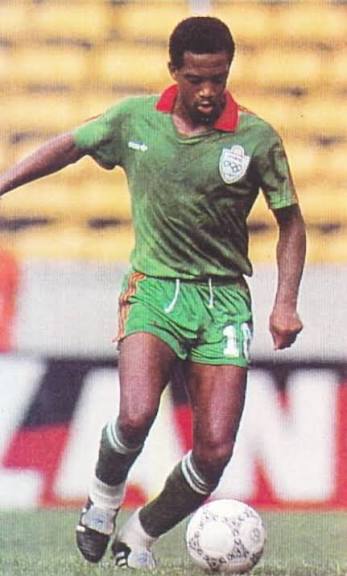
Timoumi belonged to football’s great tradition of the number 10. But his importance cannot be reduced to a shirt number.
The number 10 represented responsibility: to create, to imagine, to unlock defensive structures, and to give a team its attacking personality.
Timoumi carried that responsibility with elegance.
His football was expressive without being careless. Technical without being excessive. Intelligent without losing its emotional character.
He understood that creativity could be a form of leadership.
That lesson remains part of his legacy.
Mexico 1986: When Morocco Changed the Story
Then came Mexico.
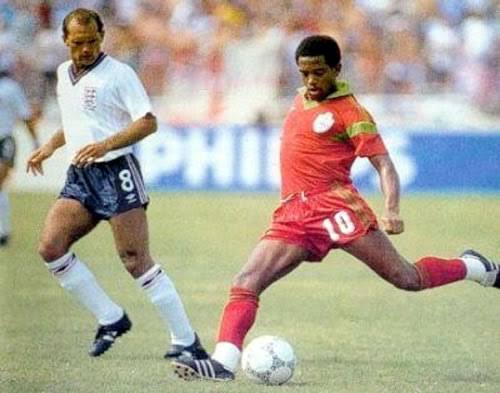
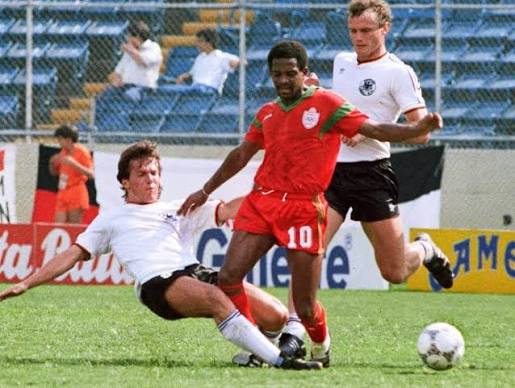
The 1986 FIFA World Cup became one of the defining moments in African football history. Morocco entered the tournament as an ambitious side, but what followed exceeded expectation.
They finished top of a group containing England, Poland, and Portugal, defeating Portugal 3–1 in a performance that secured Morocco’s place in the knockout stages.
They became the first African nation to reach the World Cup round of 16. Timoumi was one of the creative figures at the heart of that team.
For millions watching around the world, Morocco was no longer simply participating.They were competing, and they were doing so with a football identity that was distinctly their own. The achievement represented a breakthrough not only for Morocco but for African football more broadly.
The message was powerful:
African football did not need permission to belong on the world’s biggest stage. It was already there, Timoumi became part of the generation that proved it.
Beyond Morocco: Crossing Football Borders
Following his World Cup success, Timoumi’s career took him beyond Morocco, including spells with Real Murcia in Spain and Lokeren in Belgium.
But his significance had already been established. He had become an African Footballer of the Year. He had represented Morocco at a historic World Cup. And he had helped FAR Rabat become champions of Africa.
His movement into European football reflected another important chapter in the history of African players: the gradual opening of international football pathways to a generation of talent that had previously received far less global recognition.
Timoumi crossed those borders carrying the reputation of Moroccan football with him.
The Legacy of Possibility
There are footballers whose legacy is measured by statistics. There are others whose legacy is measured by what they made possible. Timoumi belongs to the second category.
His career reminds us that:
- Creativity can become cultural representation.
- Technical excellence can challenge assumptions about African football.
- A local club can produce a player of continental significance.
- A World Cup performance can change how an entire football nation is perceived.
- One generation can create possibilities for the generations that follow.
His influence therefore extends beyond the years in which he played.
Every Moroccan player who stepped onto a world stage after 1986 inherited part of a pathway that Timoumi and his generation helped establish.
Cultural Significance
Timoumi’s story is woven into the broader story of Moroccan identity through football. He represents the confidence of a nation finding its place within the international game.
He represents FAR Rabat’s contribution to African club football. He represents the artistry of the Moroccan number 10. And he represents a moment when African football began to demand a larger place within the global imagination.
His recognition among CAF’s distinguished African footballers of the previous half-century reflects the enduring nature of that contribution.
But honours alone cannot fully describe his importance. The deeper legacy is memory. The memory of a player who could make football feel intelligent. The memory of Morocco standing alongside the world’s established football powers. The memory of a generation discovering that the world was watching.
At SoulTreasury, we recognise Mohamed Timoumi as part of the cultural heritage of African football.
Not simply as a former footballer. Not simply as an African Footballer of the Year. But as one of the individuals who helped shift the narrative around Moroccan and African football. His legacy lives in the imagination of those who remember Mexico 1986. It lives in the history of FAR Rabat, It lives in Moroccan football culture, and it lives in the generations of players who followed.
Some footballers leave behind trophies, Some leave behind records, The rarest leave behind a sense of possibility. Mohamed Timoumi belongs to that rare generation.
He did not simply play for Morocco. He helped Morocco be seen.
National Inheritance

Explore Achievements
See the milestones and accolades earned throughout their journey.
Achievements


African Footballer of the Year
Moroccan Footballer of the Year

| Amendment? |
Our aim is to provide a positive and inspiring account which is why we use multiple sources to ensure the truth is portrayed. If you feel it’s inaccurate or have additional information such as parental heritage and more, Contact Us